Stop Memorizing Chords. Start Understanding Music.
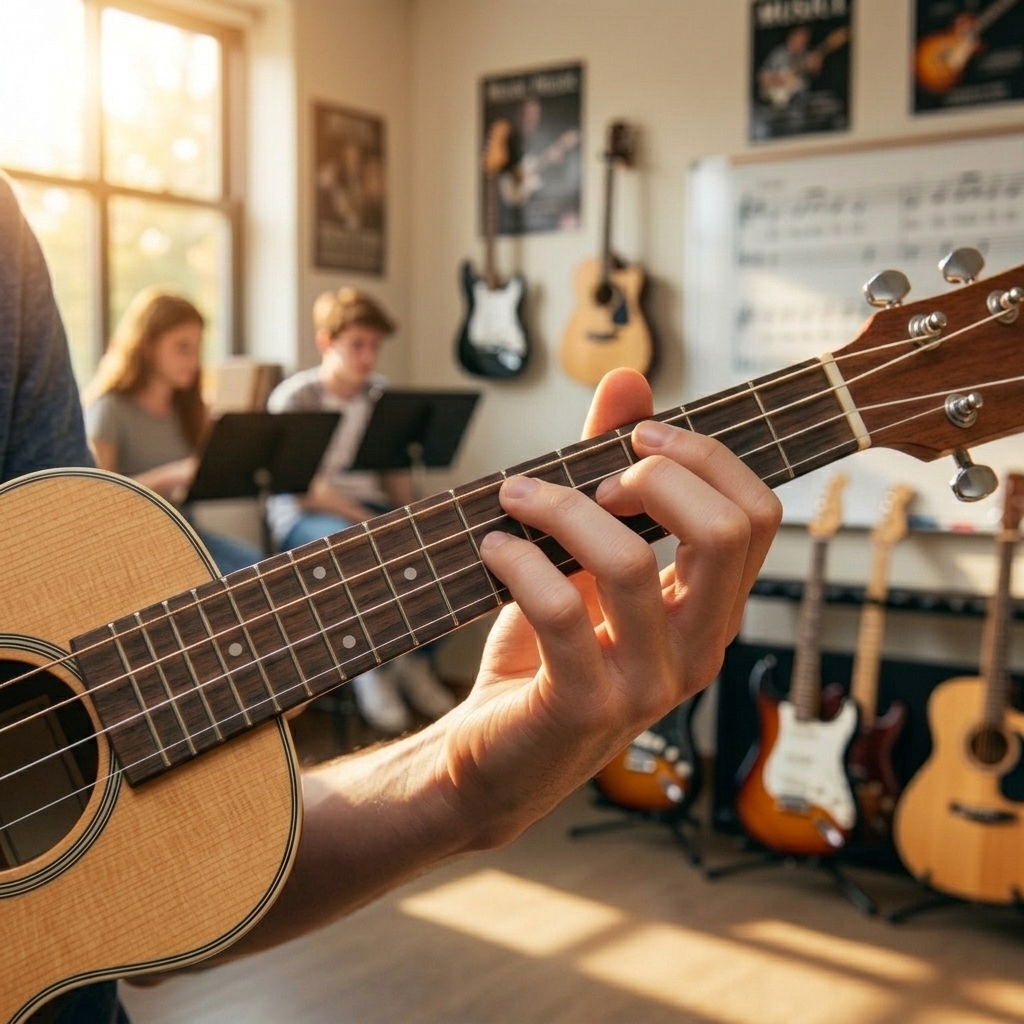
Have You Ever Wondered...
- Why you strum all those chords?
- Why chord shapes are what they are — or how they're even determined?
- Why chords differ from one instrument to the next?
- What keys are, and why we play in them?
- How you could play in any key?
- How some people seem to play anything by ear?
- Why so many songs follow the same patterns?
- How to actually become a better musician?
If any of these questions have crossed your mind, this class was built for you.
About the Class
Playing music is more than memorizing a pile of chords. That's the hard way — and it takes forever.
Basic Music Theory for Strummers pulls back the curtain on how music really works. Instead of hunting through chord charts, you'll learn the why behind the shapes, the keys, and the patterns you already play.
This is a hands-on, full-day class. You'll listen, you'll play, and you'll connect ideas to your own instrument in real time. By the end, music will feel a lot less like a mystery and a lot more like a language you can speak.
Who It's For
This class welcomes anyone curious about how music works, including:
- Anyone who's ever wanted to learn some music theory
- Strummers who've wondered why they do what they do
- Trained and untrained musicians
- Fretted instrument players: guitar, banjo, ukulele, mandolin — even bass
No prior theory knowledge? Perfect. The curriculum is designed for players with little to none.
What You'll Learn
By the end of the day, you'll be able to:
- Play a scale on your instrument
- Find any chord on your instrument — without a chart
- Play in any key — without a sheet of paper
- Noodle songs out of thin air
These aren't abstract concepts. They're practical skills you'll carry into every song you play from here on out.
Why I Developed This Class
I've always loved understanding how things work. For years, though, music itself stayed a mystery to me.
While living in NYC, I began taking classes at Juilliard — ear training, classical voice, and other musicianship topics — and slowly the fog started to lift. I believe plenty of casual strummers wonder the same thing I once did: why is music so mysterious, and how does it all actually fit together?
Over the 8 years I've spent teaching ukulele in Evergreen, Colorado, I've loved dropping in little tidbits about why we play the way we do. But without the bigger picture, those tidbits often become lost knowledge. So I built this class to share what I've learned with strummers and casual musicians who want theory that fits their level of playing.

About the Instructor
I've been playing music for 25 years (not counting childhood piano lessons). I love music, I love music theory, and I love sharing that understanding with other players.
- Juilliard-trained
- Leads the Columbine Library and Evergreen Library ukulele groups
- Plays ukulele, guitar, banjo, and piano
- Built InternetChordDatabase.com
- Lives in Evergreen with his wife and two kids
Frequently Asked Questions
Do I need to be able to read music?
No. Music-reading skills are not required.
Do I need to play an instrument? Should I bring it?
Yes and yes. Please bring an instrument you can play moderately well.
Will we be playing or listening?
Both. You'll listen and play as we learn together.
I don't know anything about music theory. Is that OK?
Absolutely. The curriculum is designed for people with little to no theory background.
Will it be streamed or available online?
No. This class is in-person only.
Share this Page
